Ten Years of the Belt and Road—the Road to a Multipolar Peaceful World
 Facebook
 Twitter
 Linkedin
 Google +
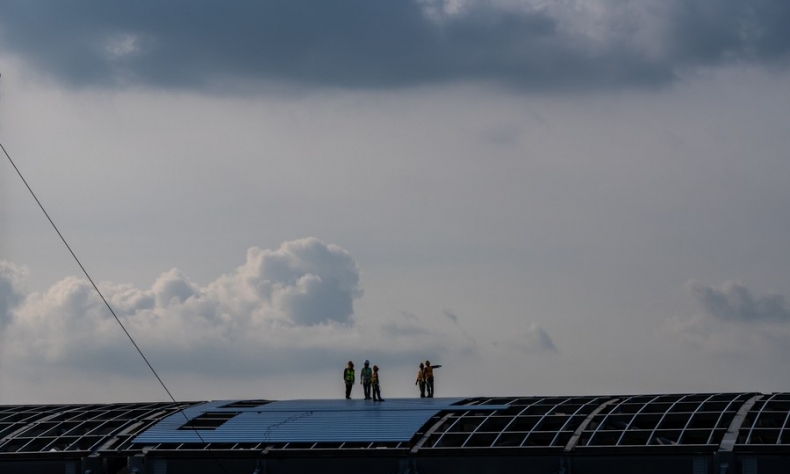
The BRI not only points out the way for mankind to overcome the challenges of the 21st century, but also exhibits the direction to move towards a peaceful future.
Chinese President Xi Jinping proposed the Silk Road Economic Belt and the 21st Century Maritime Silk Road in Kazakhstan and Indonesia in late 2013, and the idea was well received. The Belt and Road Initiative (BRI) has since attracted widespread attention from around the world. At the beginning, many Western media did not take the initiative seriously – thinking that China was overdoing itself and the initiative would fail. At the same time, experts began to see an increase in China’s influence in the regions of Central Asia, Southeast Asia, and Africa. Although many experts have studied the topic of the Belt and Road, only a few of them have truly grasped the essence of the BRI.
In 1961, Tanganyika, today’s Tanzania, gained its independence from British colonial rule. Since 1964, merged with Zanzibar, the young African republic embarked on a socialist path of development and was subsequently sanctioned by the former colonial powers. Its rich copper deposits could no longer be exported via the rail link running through the port of Durban in South Africa. As a result, Tanzania asked economically strong countries, the World Bank, and the International Monetary Fund for help in building a rail link to Dar es Salaam. In the end, only the People’s Republic of China (PRC) was willing to help, providing not only the financial resources, but also the materials and necessary machinery. The Chinese people stood up to help their African brothers and sisters who had just been liberated from colonial rule. A few years later, this friendship helped China in the struggle for international recognition, such as in the restoration of the PRC’s rightful seat in the UN.
After China implemented the policy of opening-up to the outside world, it achieved rapid economic growth. In this process it continued to promote friendly and equal relations with African and Central Asian countries. China has strengthened its cooperation with Central Asian countries since 1990, established friendly relations with the five newly independent Central Asian countries, supported their development, and continuously expanded trade with them. China’s huge production capacity in the construction and steel industries has been fully utilized, and the accumulated trade surplus and foreign exchange reserves have provided a solid backing for the country to be able to issue loans. By the beginning of this century, China had investment projects spread across the African continent.
The Chinese government has vigorously promoted the Going Global strategy, and I had the opportunity to participate directly in this development. When the new Alashankou (also known as Alataw Pass)/Druzhba railway border crossing between China and Kazakhstan was opened, I organized the handling of the first containers that were sent from China to Europe through the new terminal together with the Chinese officials of Xinjiang.

Since 1990, the U.S., the EU, and Japan have all agreed that neoliberal capitalism, through multinational corporations and free-market forces, can promote infrastructure according to the needs of companies and people. They therefore oppose state intervention and criticize China’s state-regulated economic policies.
In fact, China does not rely solely on free-market forces, but rather focuses on national economic policies to provide loans, support infrastructure in Central Asia, and open new factories along transportation routes. In this way, it promotes the industrialization of Central Asian countries, their local economic prosperity, and international trade. The U.S., which pursues geostrategic interests in Afghanistan and Central Asia, hasn’t failed to see this good momentum there.
The U.S. House of Representatives passed the so-called Silk Road Strategy Act in 1999, aiming to secure its interests in Central Asia and the Caucasus. Later in 2011, then U.S. Secretary of State Hillary Clinton proposed the New Silk Road plan in a speech she gave in Chennai, India. Under the guise of promoting stability and democracy in Central Asia, this plan intends to extend the U.S. influence deep into the heart of Central Asia through Afghanistan.
The BRI which China presented in 2013 does not include any military aspects, but instead relies on long-term investments in infrastructure and the energy industry to help industrialize the participating countries. The goal is to increase local prosperity, without political or economic conditions and free of interference in the internal affairs of partner countries. Global prosperity and poverty control depend on the interconnection of world markets, and the initiative China proposed covers all aspects of human life, from new digital economy technologies and energy transition to health care and cultural exchanges.
In Eurasia, China is actively planning the construction of six major economic corridors: China-Mongolia-Russia, the New Eurasian Land Bridge, China-Central Asia-West Asia, China-Indochina Peninsula, China-Pakistan, and Bangladesh-China-India-Myanmar. Loans from major Chinese banks will ensure investment in areas such as railways, roads, energy supply lines, and pipelines. Enterprises, special economic zones, and trading platforms are expected to settle in the investment zones, and cultural exchanges and people-to-people ties with partner countries will be further deepened.
Meanwhile, both the new transport connections through Central Asia from China to Europe and those to Southeast Asia with the connection of ports in Malaysia, Myanmar and Pakistan represent alternatives to sea transport through the Strait of Malacca.
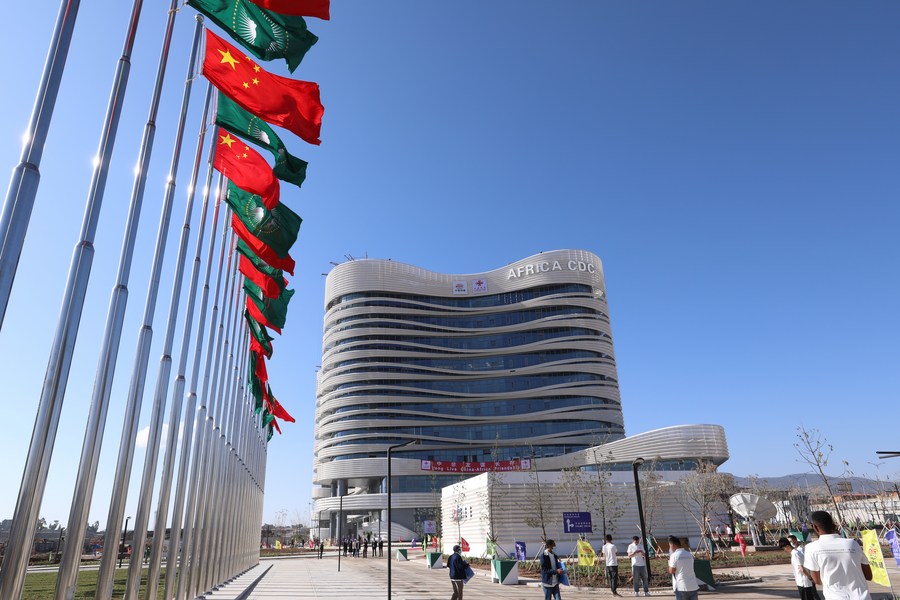
Over the past few centuries, in order to plunder Africa’s mineral resources, colonial powers only constructed local transport lines that led to overseas ports, they did not allow the development of intra-African trade. Today, China provides loans for intra-African infrastructure construction, increases connectivity among African countries, and promotes intra-African trade and economic cooperation. These will support them to enhance their political independence and help them stay free from the dominance of the former colonial powers. Statistics show that from 2013 to 2023, a total of 10,000 kilometers of standard-gauge railways, 100,000 kilometers of roads, 100 new or renovated ports, and a large number of schools and hospitals were put in operation. African Union countries have reached agreements on intra-African free trade to help each other and develop together. China has also exempted import duties on 98 percent of the commodities from many African countries.
In Southeast Asia, the operation of the China-Laos Railway has driven the rapid development of industries along the railway. A railway crossing between Malaysia and Singapore is presently being built at full speed. The construction of the China-Pakistan Railway, a key project of the China-Pakistan Economic Corridor, is in full swing, and the construction of Gwadar Port and its Special Economic Zone is nearing completion. In Myanmar, the construction of the Kyaukphyu Port is progressing, and the terminus of the China-Myanmar Railway is located here.
With the development of multilateral trade, the trade and raw material supply and import channels of Asian and African countries are expected to be diversified. This is of great benefit to all parties, whether it be China or other BRI countries, and is a real win-win situation.
Long before the official launch of the BRI, China established the Shanghai Cooperation Organization (SCO) in 2001 with Kazakhstan, Kyrgyzstan, Russia, Tajikistan, and Uzbekistan to develop joint security policies to counter Islamic extremist groups. With the introduction of the BRI, the SCO began to take on more and more economic tasks. In June 2017, India and Pakistan became full members of the SCO at the Astana Summit. Although the two countries have always had tense relations, they still hope to use this platform to strengthen cooperation with countries under the BRI. Other Asian countries have also submitted applications for accession to the SCO.
Countries such as Brazil, India, China, Russia, and later South Africa have enhanced their support and cooperation in various fields by hosting BRICS meetings. Both the SCO and the BRICS are staunch supporters of the BRI and have actively contributed to its success.
Financial integration is a vital support for the Belt and Road. To this end, China has established the New Development Bank together with other BRICS countries and the Asian Infrastructure Investment Bank with many countries, including Germany. These banks provide loans in accordance with the principles of the BRI, that is, they do not attach any political or economic conditions and do not interfere in the internal affairs of the loan recipients.
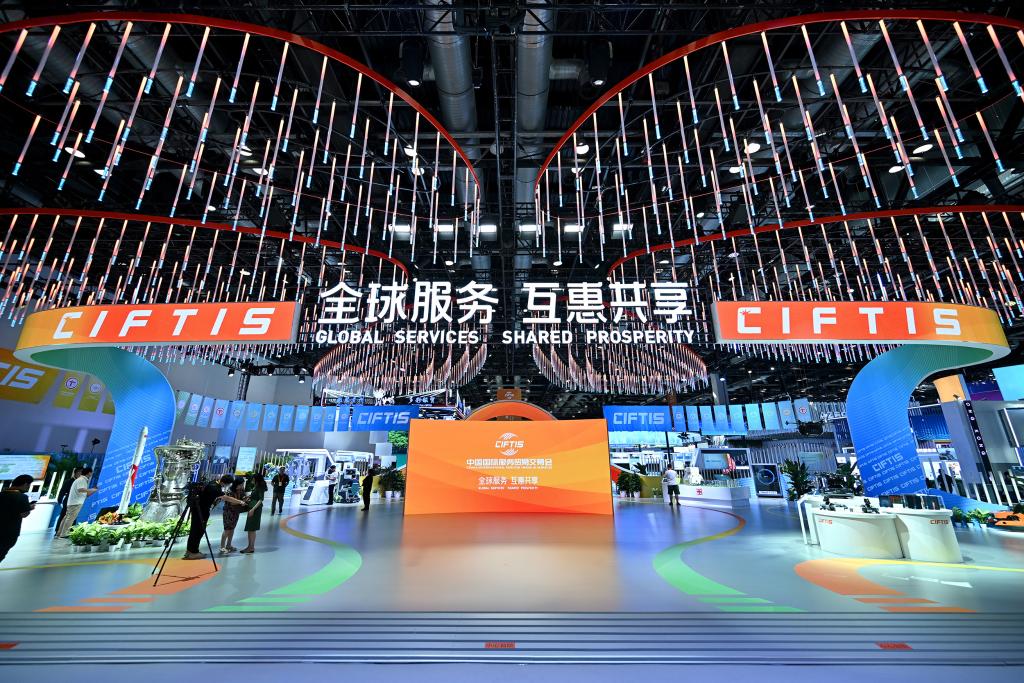
Today, more than 150 of the 193 member states of the UN have joined the BRI, and China has become the main trading partner of most countries and regions in the world.
In my view, the essence of the BRI is to help countries in Global South to develop, lift themselves out of poverty, and ultimately prosper through multilateral trade.
After years of successful development of the BRI, many countries in Europe, together with the U.S. have finally realized that this initiative is China’s success: countries of the Global South are increasingly close to each other and with China, gradually shaking off the influence or control of the previously dominant countries. In response, the EU has launched the Global Gateway initiative, while the U.S. has launched the Build Back Better World initiative. At the G7 summit in June 2022, U.S. President Joe Biden included both plans in the framework of the Partnership for Global Infrastructure and Investment (PGII). The G7 will raise US $600 billion, mainly from the private sectors in the U.S. and Europe, to invest in climate-neutral infrastructure and the digital economy in line with Western values. At this point, the countries of the Global South finally understood that these initiatives were not for them, but were intended to counterbalance the BRI.
Humankind is now facing various challenges such as climate change, energy transition, food crisis, pandemic, military conflict, and refugee crisis, all of which require the concerted efforts of the international community and mutually supportive rather than antagonistic initiatives. When the African continent achieves economic and social development and the removal of poverty through the development of infrastructure, industry, and agriculture, Europe will succeed in addressing climate change and the influx of refugees from Africa. The BRI not only points out the way for mankind to overcome the challenges of the 21st century, but also exhibits the direction to move towards a peaceful future.
DR. Uwe Behrens is a German economist and China expert who has been involved in the logistics industry in China and India for almost three decades.