Tangled Ties: How Globalization Binds and Divides China and U.S.
 Facebook
 Twitter
 Linkedin
 Google +

For all Washington’s talk of walls and barriers, China and the U.S. remain deeply linked by global trade and supply chains.
Post-Cold War globalization, driven by the United States and its Western allies, is not just the result of decisions made by powerful countries. The globalized economy has developed its own system — one built on interdependence, which both empowers and limits individual nations. Nowhere is this more evident than in the current ambivalent relationship between China and the U.S., where globalization’s dual dynamics — centrifugal and centripetal forces — are drawing the two countries into a complicated and unprecedented relationship.
Centripetal forces in globalization are those that pull economies and actors closer together through trade, finance, supply chains and technology. These forces have tied China and the U.S. into a web of mutual dependence and mutual benefit. For example, with its trade surpluses, China has been a leading buyer of U.S. treasury and corporate bonds. On the other hand, centrifugal forces drive countries apart, fueled by artificially amplified political differences, national security concerns, protectionist policies, and decoupling efforts to reduce risk.
The current conflict between Washington and Beijing, showcased by tariff wars initiated by the former, is no longer just about geopolitical ambition. It is rooted in the structural realities of the globalized world economy itself. To understand this complexity, we must look beyond daily headlines and trade statistics and examine the deeper interaction between the structure (the global economic system shaped by decades of integration) and agency (the strategic decisions of nations and economic actors seeking to assert their interests).
In this context, globalization is not merely a backdrop; it is an active force with a logic of its own. It is now reshaping the very agency that once propelled it, especially in the case of the U.S., which once led its expansion, and China, which has since embraced it.
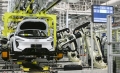
Globalization is no longer solely the product of powerful statecraft. It has become a structure that enables and empowers new actors. China and quite a few new emerging markets are prime examples. China was first integrated into the global economy as a low-cost manufacturing base. Since then, it has moved up the value chain and become a technological and industrial powerhouse. Through participation in global supply chains and institutions such as the World Trade Organization (WTO), China has added to globalization’s centripetal forces. Today, China stands as the world’s largest manufacturing hub, a major trading partner of more than 150 nations and regions, and a leading player in advanced industries including 5G, artificial intelligence, electric vehicles and semiconductors.

China’s actions help strengthen global connections by increasing engagement with international organizations such as the United Nations and the WTO. Through this involvement, China also contributes to global governance in areas like peacekeeping and climate change. The China-proposed Belt and Road Initiative (BRI) acts as a key centripetal force by promoting infrastructure development and connectivity across Asia, Africa and Latin America. The BRI helps integrate large parts of the Global South into international markets and institutions, fostering cooperation and mutual economic benefit.
While China pushes for reforms in global governance to better represent the interests of the Global South, Washington sees China as a disruptive centrifugal force. The U.S. views China’s actions of promoting new governance models, building complementary financial institutions, and reshaping global economic and technological hierarchies as a challenge to the foundations of the U.S.-led liberal order.
However, China’s rise was enabled by the very centripetal economic forces of integration and interdependence. While the U.S. certainly benefited immensely from globalization by outsourcing production to access cheap labor and capitalizing on global financial flows, China used the same forces to modernize its economy through a distinctly state-led development model. This path has allowed Beijing to both integrate into and help reshape the global economy to reflect a global community of shared future.
In essence, globalization drew China in and empowered it. Now, that empowerment carries structural weight. Given China’s pivotal role in global supply chains, any attempt to exclude it would trigger worldwide economic disruption. This is the centripetal force of globalization in action: the deeper countries rely on China for goods, components, and markets, the more irreversible this interdependence becomes. That is why tariff wars—like those launched under President Donald Trump—are unlikely to force China to back down.
The U.S., once the chief architect and leading champion of globalization, now finds itself constrained by the very system it created. China’s pragmatic approach is increasingly outpacing America’s liberal, market-driven model—prompting centrifugal forces to take hold. Faced with the ascent of the world’s largest developing economy, the U.S. is attempting to redraw the geopolitical and economic map. Through tariffs, export controls, semiconductor alliances, and its “de-risking” strategy, Washington seeks to restrain Beijing by deliberately weakening the economic ties that bind the two giants.
But unraveling a deeply integrated global economy is no simple task. Supply chains today are complex and transnational, with Chinese components embedded throughout. Even alternative suppliers, such as those in ASEAN, Mexico or the European Union, rely on Chinese inputs to manufacture the goods the U.S. seeks from elsewhere. A U.S. Federal Reserve report found that as the U.S. bought fewer goods directly from China, it increased imports from other countries that were, in turn, buying more from China. Here, globalization’s centrifugal forces — driven by security concerns and political calculations — clash with the deeply embedded centripetal structure of the global economy. The U.S. may want to pull itself away, but the global economy pulls it back.

These dual dynamic forces (centripetal integration and centrifugal disintegration) have created a global system marked by internal contradictions. While China and the U.S. remain economically intertwined through trade and supply chains, they are growing increasingly divided by the U.S. efforts to retain its global superiority over other nations through sabotaging rise of any country coming closer to its shoulders. Such efforts may take the forms of ideological, strategic and security tensions with China.
To the dismay of those seeking to contain China, the balance of power between China and the U.S. is gradually shifting. While the U.S. still holds financial clout and leads in certain technological innovations, its agential power is increasingly limited. China, by contrast, has become an actor that has made it harder to isolate, sanction or decouple from. U.S. attempts to contain China, particularly in strategic areas like semiconductors, reflect a broader effort to use political will to reshape the global economic framework. But these actions come with significant trade-offs: American companies risk losing profits, allies may face China’s countermeasures and consumers bear the burden of higher prices. At the same time, China is intensifying its push for self-reliance by advancing domestic chip production and ramping up state-led investments. This is the feedback loop of globalization. Every attempt to pull apart the system triggers adaptive responses that bind it back together.
In today’s interconnected world, influence is increasingly defined not just by traditional forms of control but by structural centrality. Being indispensable to the functioning of the global economy, China has emerged as a key actor positioned at the heart of many global value chains. The broader context of China-U.S. relations is less about direct confrontation and more about how both nations navigate this complex landscape of shared responsibilities and interdependence.
Ultimately, the global economic system has become too intertwined for the bilateral relationship to be seen through a purely adversarial lens. The relationship between China and the U.S. is influenced by two forces of globalization: centripetal forces that pull countries together and centrifugal forces that push them apart as each nation pursues its own interests. Understanding this relationship means seeing its complexity. It involves not just power struggles, but also adaptation, cooperation and coexistence within a closely connected global economy. The way out of its current dilemma, therefore, is for the U.S. to adopt a new approach to its relationship with China. It should see China more as a working partner instead of a pacing competitor or adversary.
Li Xing is a Yunshan leading scholar and director of the European Research Center at Guangdong University of Foreign Studies, as well as an adjunct professor of international relations at Aalborg University in Denmark.