Maintaining Stable China-Germany Relations in a Changing World
 Facebook
 Twitter
 Linkedin
 Google +

Both China and Germany support an open and multilateral world and hope to expand international cooperation, promote regional and global dialogue on peace and security, and oppose the use of force by major powers to seek clout and gain sphere of influence.
When China and Germany transcended huge differences in their political and social systems to formally establish diplomatic relations, few people could have imagined the tightness that the bilateral relationship would reach today, extending to wide-ranging fields and developing at multiple levels. After 50 years of vicissitudes, China-Germany relations have once again come to a crucial crossroad. To steer the important bilateral ties clear of potential crises, the two countries should first think through the following three fundamental issues.
First, the need to understand the characteristics of the times. Facing changes, both China and Germany hope to become “global players,” have a bigger say in regional and global governance, and actively seek forward-looking decisions to reach that end. From China’s perspective, the world today is faced with changes unseen in a century. By significantly improving its comprehensive national strength and international status, China intends to more confidently engage in international affairs and contribute more Chinese wisdom to global governance. For the German side, the Scholz administration has also recognized a “turn of the times,” and plans to craft a national security strategy, with the intention to increase its arms budget and national defense capability, and further enhance its influence in Europe as well as the rest of the world. Meanwhile, Germany has adjusted its diplomatic and security policies, trying to change the traditional diplomatic thinking featuring “promoting change through economy,” and develop a diversified strategy. Moreover, the country has also showed its eagerness to be involved in the Indo-Pacific affairs, demonstrating its global clout.
Second, the definition of bilateral relations. The lingering COVID-19 pandemic, regional conflicts, and the consequential problems have heightened the geopolitical awareness of Europeans, leading to politicians, think tanks and media deliberately emphasizing competition and confrontation in terms of the political and social system. Throughout years of developing relations with Germany, China has stressed the positioning of bilateral comprehensive strategic partnership, hoping that China-Germany relations could play a leading and exemplary role in China-EU relations. Meanwhile, in its exchanges with Germany and Europe, China has also intended to show a development model and path that is based on its own national conditions. On the other hand, Germany and Europe are trying to revise their positioning of China-EU relations, increasingly adopting the triple positioning of taking China as a partner, competitor, and institutional opponent, with particular emphasis on institutional difference. The rise of geopolitical factors has led to an increasing number of disputes and contradictions between China and Germany.
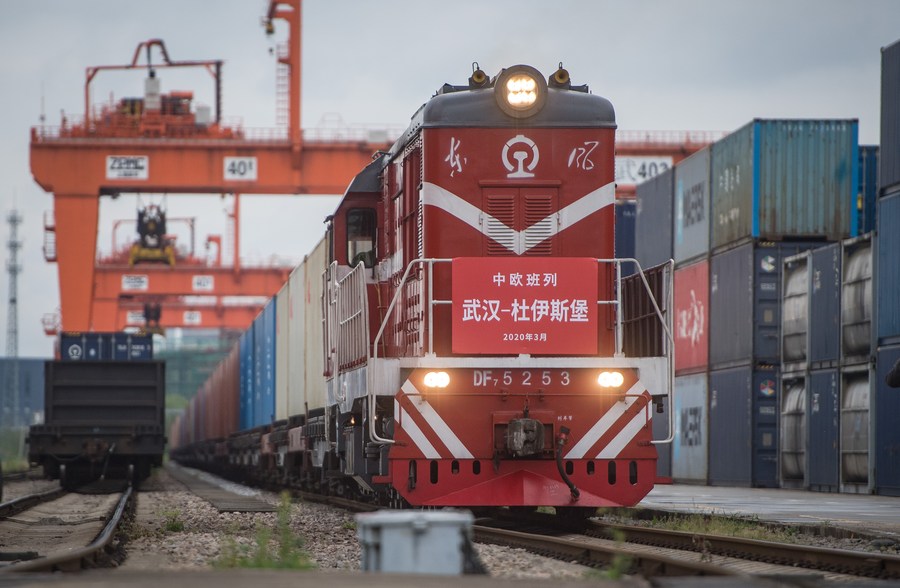
Third, the understanding of external dependencies. Amid the complex and changing global political, economic and scientific landscapes, influenced by deglobalization, a new round of technological revolution, and regional conflicts, China and Germany have begun to pay attention to the resilience of supply and value chains and independent innovation, and reexamine the relationship between independence and international cooperation. China has proposed to speed up the establishment of a new development paradigm of “dual circulation,” which allows the domestic and overseas markets to reinforce each other, with the domestic market as the mainstay. Meanwhile, the country has heightened research and development of key technologies and sought to achieve independent innovation in fields of science and technology. On the other hand, in Germany, getting rid of external dependence has become the consensus and main theme of the political circle for a period of time. Norbert R?ttgen, a member of Christian Democratic Union, once indicated that Germany currently faced dangerous external dependency in three aspects, namely, economic dependence on China, security dependence on the U.S., and energy dependence on Russia. Based on this perception, Germany has tried to reduce its external dependence in fields such as politics, economy, security, and energy, pursued a diversified layout, and paid increasing attention to establishing new partnerships in Asia, Africa, and Latin America.
Today, 50 years after the establishment of the bilateral diplomatic relations, the basis for cooperation has remained resilient. In politics and diplomacy, China’s overall policy and strategic vision about Germany has maintained stable and predictable. Many of the favorable policies of the reform and opening-up have taken into consideration the overall requirements of developing China-Germany relations, directly benefiting Germany.

For example, Germany-based Allianz Group was approved to set up China’s first foreign holding insurance company. But after years of stability in Germany’s China policy, there has been a relatively large adjustment recently, which is shown in the increasing weight of geopolitical elements, reducing dependence on China, and strengthening the coordination between Europe and the U.S. However, the foundation for bilateral cooperation is still secure. Europe’s geographical location determines that Europe is quite different from the U.S. in terms of political, economic, security interests, and practical considerations. Europe must strengthen itself by adhering to European strategic autonomy. With this understanding, German policymakers should face up to Europe’s problems and strategic mistakes in internal unity, security, and defense construction, and avoid falling into the economic downturn, tight energy supply, and food shortages because of blindly following the U.S. It is even less necessary to ascribe main problems and contradictions to its dependence on China, overestimating the threat posed by economic and trade dependence, and hype about potential risks to the German public safety from “untrustworthy” manufacturers.?In fact, the integrity review of Chinese-funded enterprises represented by Huawei in their European operations is far stricter than that of ordinary enterprises.
In the field of economy and trade, a shared understanding among Chinese and German economic circles alike is that mutual dependence brings win-win results. Against the backdrop of increasingly cautious political exchanges, economic and trade exchanges provide the most important driving force for stabilizing and deepening China-Germany relations. China has been Germany’s largest trading partner since 2016. During the first half of this year, the Germany’s direct investment in China reached €10 billion, setting a new high for half-year investment since the new century. German companies represented by Daimler, Volkswagen, and BMW have continued to expand their business in China in different ways. The Germany-based multinational chemical company BASF decided to further advance its second integrated production base project in China at the end of July. In 2030, €10 billion will be invested in the construction of an integrated base in Zhanjiang, south China’s Guangdong Province. The German economic model is highly dependent on trade cooperation with other countries. Therefore, practically it is impossible for Germany to decouple with the rest of the world including China. The vast majority of German companies with business in China are also reluctant to give up the vast Chinese market, which shows great growth momentum in many fields including chemical engineering and electric vehicles.
The whole world is currently facing epochal challenges. The globalization process has been temporarily thwarted and the global economic structure based on the international division of labor and cooperation formed after the end of the Cold War, has been undergoing changes. The COVID-19 pandemic and the increasingly frequent extreme weather and climate events have seriously hindered the economic and social development of all countries in the world. Regional conflicts represented by the Ukrainian crisis have triggered secondary challenges such as regional security crises and energy supply crises, dragging Europe into a protracted war of attrition. The global political landscape is changing, which has made China-Germany relations increasingly complex. For this reason, maintaining a stable and long-term China-Germany relationship is of great significance for coping with the challenges of the times.
Both China and Germany support an open and multilateral world and hope to expand international cooperation, promote regional and global dialogue on peace and security, and oppose the use of force by major powers to seek clout and gain sphere of influence. China has always advocated exchanges and mutual learning among civilizations and the establishment of a new type of major-country relationship. China welcomes the peaceful settlement of various international differences and disputes, maintains that the political, economic and social systems of China and the West are rational choices made by each country based on their own national conditions, local features, and historical development, and that institutional differences should not become obstacles to developing bilateral relations. For this reason, the basis of Germany’s new China strategy should not be confined to limited cooperation and geopolitical thinking, but rather should seek common ground while shelving differences, and respect the differences and uniqueness of social systems and historical development paths of each other.
Thus Germany should change its Cold War mentality of being either an enemy or a friend, accept the coexistence of competition and cooperation, and put more emphasis on common interests and basic consensus.?Only by seeking an eclectic approach and deepening cooperation in fields across the board, will the two countries be able to play a more important role in stabilizing the global landscape and effectively addressing major global issues.
Wu Huiping is deputy director of the German Studies Center of Tongji University.?