Commemorating Victory, Confronting Complexities
 Facebook
 Twitter
 Linkedin
 Google +

From the cautious gaze of Washington to the divided sentiments of Brussels, the denial of Japan, to the hopes of the Global South, the parade was a mirror of our times. It demonstrated the enduring relevance of WWII memory, the complexities of global power and the urgent need to confront the ideologies that threaten peace.
On September 3, China hosted a military parade in Beijing to observe the 80th anniversary of the victory in the Chinese People’s War of Resistance Against Japanese Aggression and the World Anti-Fascist War. This event was more than a ceremonial display—it was a deeply symbolic moment that reflected China’s historical memory, its evolving geopolitical posture and its vision for a multipolar world.
The parade featured more than 10,000 troops and advanced domestically-produced weaponry. Foreign dignitaries, including leaders from 26 countries, attended the event. It was designed to project strength, unity and historical continuity.
But perspectives differ, depending on whether you are looking from Beijing, Washington, Brussels, Tokyo or BRICS.
For China, the parade is a reaffirmation of national resilience and a tribute to wartime sacrifices. Between 1931 and 1945, China suffered roughly 35 million military and civilian casualties. The victory over Japan was not only a military triumph but indicated the end of foreign domination and the beginning of national rejuvenation.
The parade’s emphasis on domestically-produced armaments organized by combat function sent a clear message: China is no longer militarily dependent on, or beholden to, foreign powers for its defense.
This arrangement reflected a strategic shift: Showcasing cutting-edge domestically-produced land, sea and air-based systems demonstrated the country’s readiness to defend its sovereignty while contributing to global peace.
China’s official narrative frames its military modernization as defensive and peace-oriented. The concept of a community with a shared future for humanity is central to this vision. It suggests a world order based on mutual respect, non-intervention and cooperative development.
The U.S.
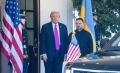
From Washington’s perspective, China’s military parade was considered strategic competition. While the U.S. acknowledges the historical significance of World War II (WWII) commemorations, it often interprets them as displays of power that challenge the U.S.-led international order. In essence a projection of its own tactics and strategies.
Meanwhile, the resurgence of far-right ideologies, white nationalism and political polarization in the U.S. are eerily reminiscent of the issues behind the war whose end is being celebrated. Fascism, as history shows, is an evil that recedes but never disappears. The January 6 Capitol riot and the rise of extremist groups have drawn uncomfortable parallels to the ideological fervor of the 1930s. In this light, China’s anti-fascist narrative resonates as a reminder of the dangers of unchecked nationalism and militarism.
Europe
Europe’s response to China’s parade is complex and divided. On the one hand, Germany and France have expressed concern over militarization and the erosion of liberal democratic norms. On the other hand, countries such as Hungary and Serbia view China’s rise as a counterbalance to Western dominance. The European Union remains indecisively cautious, emphasizing dialogue and multilateralism while acknowledging China’s growing influence and America’s growing intransigence.
The parade was a reminder of Europe’s own struggles with the past. The electoral gains of far-right parties—such as the AfD in Germany and National Rally in France—have reignited debates about historical revisionism and the fragility of post-war peace. In this context, China’s emphasis on anti-fascist legacy offers a sobering counterpoint to the erosion of historical truth, a reminder that the lessons of WWII must be actively preserved, not passively remembered.

Japan
Japan’s response to the parade was shaped by a complex and often contested historical narrative. While the country has made strides in post-war pacifism and democratic development, unresolved issues from its wartime past continue to cast a shadow. The legacy of the Nanjing Massacre, the exploitation of “comfort women” and the enshrinement of convicted war criminals at the Yasukuni Shrine remain deeply sensitive topics. These issues are compounded by educational materials that downplay or euphemize wartime atrocities, referring to them as mere “incidents.”
China’s commemoration served as both a reminder and a rebuke. It underscored the importance of historical accountability and the dangers of revisionism. For many in China, and across Asia, the parade was not only a celebration of victory but a call for justice and remembrance. In this context, Japan’s muted engagement with its wartime legacy stands in contrast to the parade’s emphasis on historical truth and anti-fascist solidarity.
BRICS
Among BRICS nations, the parade was largely viewed as a legitimate act of remembrance and a symbol of multipolar aspirations. Russia, in particular, shares a deep historical bond with China rooted in wartime sacrifices. President Vladimir Putin’s attendance at the parade underlined the historic and strategic alignment between the two nations. Both countries emphasize sovereignty, non-intervention and resistance to Western hegemony.
For many in the Global South, the parade symbolized an alternative vision of global order. It suggested that power can be distributed more equitably, allowing nations greater autonomy in shaping their destinies. Yet this vision is not without skepticism. While China’s rhetoric emphasizes peace and cooperation, its growing economic and military footprint raises questions about the true nature of its intentions. Is China offering a genuinely non-interventionist model, or simply replacing one hegemon with another? To answer this, China can only point to its 12 years of Belt and Road investment, peaceful rise and advocacy for a multipolar world that respects the right to sovereignty, security and development for all countries. (The Belt and Road Initiative is a China-proposed framework to boost connectivity along and beyond the ancient Silk Road routes—Ed.)

Fascism
At the heart of this commemoration lay a deeper lesson: Fascism is an evil that recedes but never disappears. The conditions that led to WWII—economic instability, ideological extremism and militaristic nationalism—are reemerging in several forms across the globe. From the rise of authoritarian leaders to the spread of disinformation and xenophobia, the world is once again confronting the specter of ideological conflict.
China’s parade, with its emphasis on anti-fascist legacy, served as a warning to the present. It called for vigilance, unity and historical awareness. It reminds us that peace is not a given—it must be defended, nurtured and reimagined. The faltering international community must build safeguards against the resurgence of extremist ideologies.
Hegemony
One question raised by the parade is whether strength can be aligned with peace and equity. In the West, it is axiomatic that strong countries will seek hegemony. Yet, China has emphasized that its rise does not threaten global stability. Instead, it proposes a model where development contributes to peace rather than conflict.
It is a vision that will require the international community to reshape its norms so that power is exercised responsibly through consensus, not dictation. This includes creating mechanisms that foster transparency, accountability and multilateral cooperation. It also requires a redefinition of security—one that prioritizes human wellbeing over military dominance, and sovereignty over forced conquest. Only then can strength become a force for stability rather than a trigger for confrontation.
China’s 2025 military parade was a moment of reflection, assertion and aspiration. It commemorated a painful yet pivotal chapter in history, honored the sacrifices of millions and projected a vision of national strength. But its meaning was not confined to China alone.
From the cautious gaze of Washington to the divided sentiments of Brussels, the denial of Japan, the solidarity of Moscow, to the hopes of the Global South, the parade was a mirror of our times. It demonstrated the enduring relevance of WWII memory, the complexities of global power and the urgent need to confront the ideologies that threaten peace.
In remembering the past, we are called to shape the future—with courage, clarity and compassion.
The author is an American-born commentator and analyst specializing in Chinese politics, economics and international relations and a Senior Fellow at the Taihe Institute.