 Facebook
 Twitter
 Linkedin
 Google +

Japan Should Face up to History, Correct Mistakes
Japan should correct course, reaffirm commitments, and contribute positively to a stable, predictable and cooperative East Asia.

Japan should correct course, reaffirm commitments, and contribute positively to a stable, predictable and cooperative East Asia.
This year’s emphasis on transforming traditional industries through advanced technology and new innovation strategies generates a healthy space to improve market access.

Optimism for China’s role is well-founded, given its position at the forefront of global climate governance, its demonstrated commitment to climate issues, and its capacity to deploy technological expertise for international benefit.
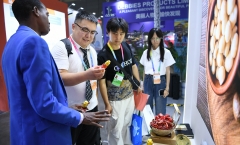
Together, these developments illustrate a mature, multidimensional partnership capable of delivering both robust economic growth and sustainable, people-centered progress.

Chinese cultural products are increasingly entering the global stage with two distinct advantages: a rich, untapped reservoir of cultural heritage and a focus on novel content that resonates with audiences seeking authenticity.

For over two decades, Rabe has dedicated himself to building bridges for Sino-German exchanges in medicine and culture.

China’s Gen Z is pioneering a new era of consumption — one that balances emotional fulfillment with ethical responsibility and environmental sustainability. This shift isn’t just reshaping consumer habits; it’s actively fueling China’s economic advancement.

How did a bottle of chili paste from Sri Lanka make its way overseas and go viral in a Chinese live streaming? And how did a traditional handmade stool help revive the rural economy in Sri Lanka? What made a live streaming that sold out its inventory in just 3 minutes convince Sri Lankan?entrepreneur Chiranjaya Udumullage of the huge?potential and strong vitality?of the Chinese market? Devinder Kumar, a host from CICG Europe-Asia, enters the live streaming room, eager to find out how Chiranjaya Udumullage is promoting business?and sale for his hometown’s quality products.

Can a megacity of over 20?million people be a haven for wildlife??Why has a British conservationist recorded over 450 bird species in Beijing, and what made him stay here for more than a decade? Belgian host Romuald Bronchart joins Terry Townshend, a British wildlife conservationist,?to experience a day of birdwatching in the mountains of west Beijing.?Through Terry’s eyes, we have a glimpse at China’s progress in ecological conservation?and the questions that matter most when nature, education, and public awareness begin to intertwine.

What kind of architecture?can?truly represent?a city? Japanese architect Shuhei Aoyama, who has been living?in Beijing for nearly 20 years, has his?answer. From Baitasi Hutong to Yangzhou’s historical?streets, he gently bridges tradition and modern life. For Aoyama, architecture isn’t just about shapes—it’s about people, nature, and the city itself. Joined by Belgian host Romuald Bronchart, the two explore how old buildings can revive?again, and how design can quietly reshape the future of Chinese?cities.

Given the impact of tariffs on international supply chain stability and the need for further protections and future collaborations, the 3rd CISCE’s role is critical.

The extent to which Europe can truly assert its independence is still uncertain. However, Spain’s example clearly demonstrates that a genuinely independent foreign policy is achievable and beneficial.