A Significant Contribution to the Global Multilateral Trading System
 Facebook
 Twitter
 Linkedin
 Google +

The world multilateral trading system?will receive?fresh, strong support, and will prevail over unilateralism and protectionism over time.
Chinese Premier Li Qiang?recently announced that?China, as a major developing country, will not seek new special and differential treatment in the current and future WTO negotiations. This significant announcement was made at a United Nations General Assembly-related meeting on September 23, 2025.
Against the backdrop of unprecedented challenges confronting?the multilateral trading system, China made the solemn commitment to safeguard and strengthen this system.
China’s position paper comprises?three integral parts.?First, China is a developing economy and a member of the Global South, and is entitled to the inherent institutional right to special and differential treatment in the WTO. Second, China has consistently exercised its right to special and differential treatment in an independent and pragmatic manner. Third, in?current and future WTO negotiations, China will not seek new special and differential treatment (S&DT).
S&DT: A?fundamental guarantee for?developing economies
The General Agreement on Tariffs and Trade (GATT)?was?founded?in 1948?with?the core principle of unconditional most-favored-nation (MFN) treatment for?all members alike, which led to considerable tariff cuts worldwide through several rounds of multilateral trade talks and,?consequently,?robust growth?in world trade and?the?world economy.
Conversely, disadvantages emerged for?developing and?least developed economies. Compared to developed economies, their products were significantly less competitive and thus hindered economic development. As a result, they demanded special favors. The UN General Assembly established the UN Conference on Trade and Development (UNCTAD) in 1964, taking?into?full account the balance between free trade and economic development. GATT, on its part, added Part IV “Trade and Development”. In 1968, UNCTAD agreed to establish a general, non-discriminatory, and non-mutual preferential trade mechanism, known as the Generalized System of Preferences (GSP), for developed economies. This mechanism?provides?much lower tariff levels?on products from developing economies. In 1979, the GATT parties conference approved the Clause of Authorization, providing a legal basis for GSP, which became part of GATT 1994.
The WTO replaced the GATT in 1995,?but inherited?all GATT clauses,?which constitute special and differential treatment. According to UNCTAD statistics from?October 2000, S&DT comprises?145 measures. Developed WTO members should provide favor treatment in?terms of?tariff, market access and technical?assistance. The developing WTO members were eligible to enjoy higher flexibility?in commitments, actions,?and trade policy tools, as well as more exception measures,?and a longer transition period.

While the multilateral trading system, based on the current WTO rules,?has achieved significant successes for all members, the S&DT in particular has contributed substantially to the trade and development of developing?economies, especially, low-income developing countries (LIDCs) and least developed countries(LDCs).
Since?the?WTO’s?founding in 1995, merchandise?trade has grown?at?a rate of?5.8 percent per year, and service trade at 6.8 percent per year. Total global trade (merchandise and services?combined) reached?$33 trillion in 2023, more than five times the amount in 1995. The implementation of?S&DT, resulted in a significant increase in the share?of?world exports?from?middle and low-income countries,?rising?from 17 percent to 34 percent. Additionally,?the number of people living in poverty fell from 40 percent to 10 percent of the total population.
China and S&DT: Eligible yet flexible
At the time of China’s entry?into the WTO in 2001, it was accepted as a developing economy and thus?became?eligible for?WTO Special and Differential Treatment (S&DTs). China had?enjoyed?GSP for decades before?its?removal in recent years. It also benefited from the higher grain import tariff quotas, which protected?its food industry.
Conversely, China has refrained from utilizing?S&DT in most instances. Instead, it has?taken voluntary measures?to enhance market access. According to the final agreement of the Uruguay Round, WTO developed members committed to a lower average tariff rate of?under 5 percent,?and developing members committed to a rate of under 10 percent. By 2025, China’s average tariff level was 7.3 percent, while?the trade-weighted average was 4.4 percent, very close to the level of developed members. China has also drastically cut the negative list, removed all restrictions on manufacturing market access and opened most of service sector to foreign investors. During the WTO talks?on?the?COVID-19 vaccine IP waiver, China again agreed to forgo?the transition period, which is?an eligible right of a developing member. China has granted?zero tariff to 53 LDCs in Africa, effective December 1, 2024. This preferential treatment usually awarded by developed economies. Contrary to Western critiques that claim China has gained significant advantages from the WTO’s Special and Differential Treatment (S&DT), China has actually received only limited special treatment.

China’s recent position paper indicates that it will retain its existing S&DT but will not pursue S&DT in future WTO negotiations. This means China will take on commitments similar to those of developed countries, significantly advancing future WTO discussions.
With all of this being said, China is still classified as a developing economy and is part of the Global South. In 2024, its per capita GDP was $13,303, which is below the World Bank’s high-income threshold of $13,935 and the global average of $13,673. This figure is significantly lower than Hungary’s $23,310, one of the lowest among developed economies. A country’s development status is based on its per capita income rather than its total economic size; for example, India has a larger economy than Switzerland but is not considered developed, whereas Switzerland is. China’s status as a developing member of the WTO will remain unchanged, and it will continue to defend the rights that come with this status.
A key supporter and driver?of?global multilateral trading system
China’s latest announcement of no longer seeking S&DT in future WTO negotiations?demonstrates its significant responsibility and contribution to upholding?the global multilateral trading system. Ngozi Okonjo-Iweala, Director-General of the WTO,?hailed China’s decision as a critical moment for the WTO, demonstrating?its commitment to a more balanced?and?fairer global trading system.
This?shift will benefit?all WTO members. Developed nations may feel more inclined to put forward new offers,?expecting reciprocal steps?from China.?At the same time,?developing countries could see renewed motivation, knowing that China is no longer?seeking?S&DT. Together, these dynamics could inject momentum into efforts to strengthen global trade and development.
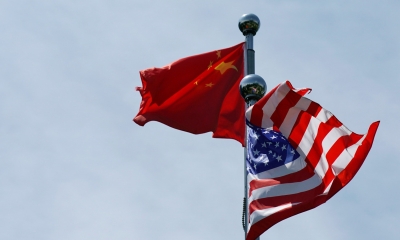
It will?also?be conducive to improving?China-U.S.?trade relations, as the U.S.?will have no reason to complain China’s competitive advantage from S&DT.
It will be a key driver in WTO reform, the central topic of?the?WTO 14th Ministerial Conference in Cameroon in March 2026.
The world multilateral trading system?will receive?fresh, strong support, and will prevail over unilateralism and protectionism over time. China will continue to demonstrate?responsibility and make continuous contributions to building a community?with a shared future for?humanity.
The article reflects the author’s opinions, and not necessarily the views of China Focus.