What can China Offer for Inclusive Global Growth?
 Facebook
 Twitter
 Linkedin
 Google +

Pressing global issues call for global efforts. What can China offer to the cause of promoting inclusive growth? The article provides some highlights of China’s new initiatives in the fields of ideas, institutions and infrastructure.
By Fu Jun
We live in fast-moving times and an increasingly interconnected world. Globalization has reached new heights in the 21st century. Together with new technology, it has brought enormous benefits to many, but these gains have not been distributed evenly, which has been a source of discontent and the cause of recent backlashes against the very processes of globalization.
Indeed, when about half of the world’s wealth rests with the top 5% of the population, the economy is in trouble. Economic principles tell us that equilibrium must exist between supply and demand for growth to continue.
Pressing global issues call for global efforts. What can China offer to the cause of promoting inclusive growth? Here are some highlights of China’s new initiatives in the fields of ideas, institutions and infrastructure.

New Educational Initiative
Education is one crucial step in addressing uneven development. China has benefited from learning this, and is now ready to give back. When the country started its process of reform and opening up in the late 1970s, Deng Xiaoping—the architect of China’s economic modernization—sent large numbers of Chinese students to study abroad. Now, it is increasingly recognized that growth is fostered more profoundly by developing human talent than by supplying physical capital. Where sizable investments have been made in education and other elements of the human factor, technological advances, which are a by-product of sophisticated human ideas, have played a key role in economic growth or industrial catch-up.
In light of this, China established training and degree programs in its higher-learning institutions that enabled students, scholars and government officials from developing countries to share the Chinese experience of growth. One example is the Institute of South–South Cooperation and Development, created at Peking University in 2016 with its first 50 students from developing countries in Africa, Asia and Latin America. This move symbolizes a shift in China’s technology transfers to the developing world. Once a provider of hardware, now China shares software: its knowledge and ideas.
Learning and training sessions often involve field trips to sites that exemplify different points on the developmental spectrum—from rural areas to special economic zones, coastal cities and the interior. By seeing different stages of development first-hand, students come to appreciate the importance of learning by doing, and of moving from exploiting comparative advantage to developing competitive advantage through innovation. In other words, in China, they can see how economies move from labor- and resource-intensive models to being capital-intensive and finally developing a knowledge-intensive edge within global value chains.
“As long as we keep to the goal of building a community with a shared future for mankind and work together to fulfil our responsibilities and overcome difficulties, we will be able to create a better world and enable better lives for our peoples,” said the Chinese president, Xi Jinping, at the World Economic Forum meeting in Davos in January 2017. These words represent China’s commitment to equitable, inclusive and sustainable development around the world.
Xi’s proposal to build a “community with a shared future for mankind” seeks to strengthen multilateralism to address global and regional imbalances. It is believed that development on a wider scale could generate new impetus for inclusive global growth. According to the World Map of Economic Growth produced by the Center for International Development at Harvard University, the countries with the biggest potential for growth in the coming decade are mostly in South Asia and East Africa. Others in South America and the Middle East are also poised to take off. Meanwhile, growth will slow in advanced economies. The United States is expected to grow at 2.58% per year and Britain slightly faster at 3.22%, while Germany, one of the leading economies in Europe, will grow at just 0.35%.
Against this backdrop, and while China’s economy is now the second largest in the world and growing roughly three times as fast as that of the United States, China can play a role in bringing developed and developing countries closer together by narrowing the rich-poor gap.
Improving Infrastructure
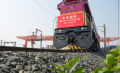
One manifestation of China’s leadership is the Belt and Road Initiative it proposed. Launched in 2013, it aims to forge partnerships—or joint ventures—along the historical Silk Road to improve connections across Asia and beyond with infrastructure projects such as roads, bridges, ports, gas pipelines, power grids and fiber-optic cables. To facilitate inclusive growth, it is critical not only to deploy means of production, but also means of delivery and access to information. And one can envision that some of today’s low-income countries—having heeded the popular refrain, “Want to get rich? Build roads first!”—may one day tell growth stories that mirror China’s.
The apparently homespun wisdom that roads precede wealth corresponds to the critical role governments have to play in providing public goods, especially risky, long-run physical infrastructure, to lift their countries out of poverty. For example, in the past three years, the Chinese government invested more than $182?billion to expand and improve China’s fiber-optic network. Between 1996 and 2016, it built 4.2m kilometers of roads, connecting 95% of villages across the country—and private businesses popped up along the way. Even in Shenzhen, China’s foremost market-driven special economic zone—initial rounds of infrastructure were built by army engineers. Private investments followed later.

Boosting Institutions
The rationale behind the Asian Infrastructure Investment Bank (AIIB) aligns with this logic. As a multilateral development bank (MDB), proposed by China in 2013 and launched in 2015, the AIIB aims to bring states, or sovereign money, together to address the daunting infrastructure shortfalls across Asia and beyond.
Asia alone needs to invest $1.7?trillion in infrastructure each year until 2030 to maintain climate-resilient growth momentum, according to the Asian Development Bank. As a complement to—not a substitute for—existing international financial institutions, the AIIB currently has an approved (and still-growing) membership of 84 countries from all continents, making it one of the world’s largest MDBs.
All AIIB members have signed the Paris climate accord, and the bank has an energy strategy that prioritizes investment in renewable energy and increased energy efficiency. Pledging to be “lean, clean and green”, and with its projects also open to private investment, the AIIB has great potential in the area of scaling up financing for inclusive and sustainable development in the fastest-growing regions of the world.
As another example of institution-building and commitment to green development, China has rolled out a nationwide carbon-trading scheme that makes it by far the largest carbon-trading market in the world.
Sharing Experiences
China’s market-oriented reforms mark their 40th anniversary in 2018. In the past four decades, the country’s economic growth has been astonishing, lifting some 700m people out of poverty. China’s GDP per person was about $150 in 1978. Today, it is close to $9,000, and projected to reach $12,700—the threshold for a high-income country—around 2025. China overtook Japan as the world’s second-largest economy in 2009, and became the world’s largest trading nation in 2013.
China’s rapid rise from being an agrarian backwater in the 20th century to a global power in the 21st presents lessons for other developing countries, if only because many of them now occupy the same stage of development that China did half a century ago.
To sustain growth, the role of the state and the role of the market are important, but neither should be taken to extreme. The market and the rule of law need to go hand in hand, but both need time to be nurtured and develop. A successful reform strategy is thus often a delicate matter of sequencing and balancing. When either the sequencing or the balancing goes awry, it stifles progress, as the experiences, successes and failures of many transitional economies have amply demonstrated.
Just as China has learned and achieved a great deal during the globalization of the last 40 years without merely reproducing models and systems from the rest of the world, China’s intention is not for other developing countries to directly replicate the structures that have brought about its success.
If strategies for economic growth are to succeed, they must, with clear visions and principled pragmatism, also reflect local conditions and be tailored to different stages of development in different countries and regions.
Fu Jun, the academic dean of the Institute of South–South Cooperation and Development at Peking University
Source: Beijing Review